Water generation
Use pointWater generation
Why water quality mattersThe generation route establishes the supply basis for the written process-water requirement.
Engineer the complete pharmaceutical water path—from generation and hygienic storage to recirculating distribution, monitoring and project documentation—around the required water quality and production process.

Map the water path and the process context before selecting the treatment and delivery architecture.
Use pointWater generation
Why water quality mattersThe generation route establishes the supply basis for the written process-water requirement.
Use pointProcess preparation
Why water quality mattersWater quality is reviewed at the specific preparation duty, not assumed from the industry name.
Use pointEquipment cleaning
Why water quality mattersCleaning sequence, connection arrangement and delivery conditions need to be visible in early engineering.
Use pointControlled use points
Why water quality mattersThe required quality, normal demand and peak demand are confirmed where water is actually used.
Use pointStorage
Why water quality mattersTank capacity, level control and hygienic interfaces form part of the final water path.
Use pointDistribution loop
Why water quality mattersRecirculation, materials, monitoring and return routing protect water after generation.
The required water grade must be defined before the treatment train is selected.
Pretreatment RO
Pretreatment RO Optional Second Pass / EDI Storage Distribution
Only where the customer’s approved specification and applicable project requirements call for it.
Final compliance, validation and water-quality requirements follow the customer’s approved specification and applicable project requirements.
These rows support engineering review. Final values and acceptance conditions remain project-specific.
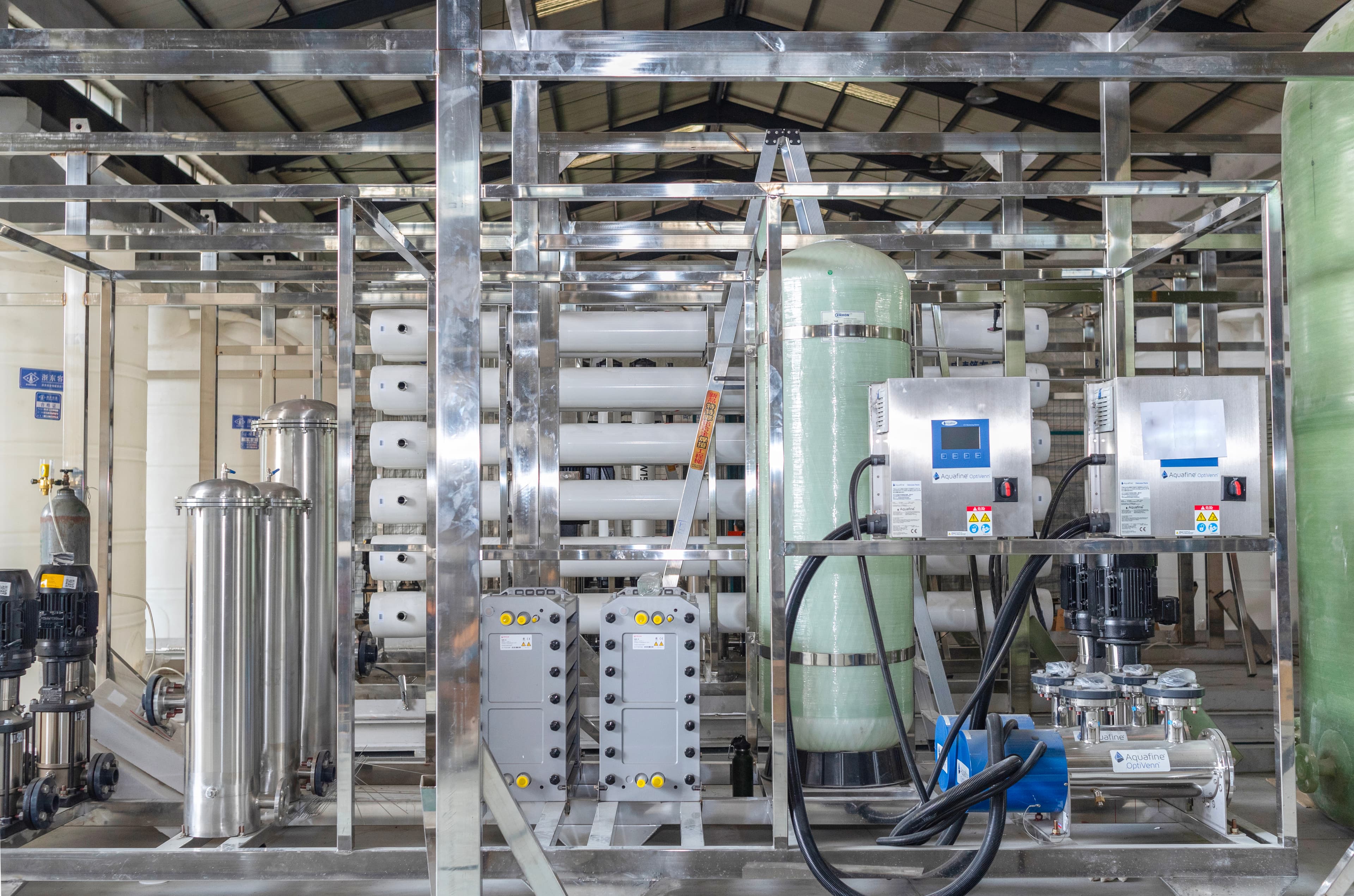
Generation is engineered with the downstream storage, distribution and control boundary in mind.
Storage, distribution and monitoring are integral engineering scope—not add-ons after the generation skid is selected.
Tank sizing · Level control · Drainability · Material specification · Sanitary interfaces
Recirculation · Pressure · Flow · Use points · Return loop
Conductivity · Flow · Pressure · Temperature · Other project-defined parameters
Hygienic engineering is carried from the water-generation skid through the tank, loop, use points and return path.
Materials are selected for the approved water duty, interfaces and cleaning approach.
Where specified, surface finish is reviewed as part of the hygienic engineering basis.
Connection style and access are coordinated with the defined process and maintenance needs.
Routing and branch arrangements are considered through detailed loop design.
Tank, piping and service arrangements are reviewed for the agreed maintenance approach.
The return loop is designed around actual use-point delivery and project-defined monitoring.
Sanitization, monitoring and maintenance access are coordinated before the final distribution configuration is released.
Can be considered where the selected approach and materials support the approved project scope.
Considered only where the project specifically requires and defines the related temperature, materials and controls.
May be selected at defined stages where the approved engineering route calls for it.
Access, drain points and serviceability are reviewed alongside the system layout.
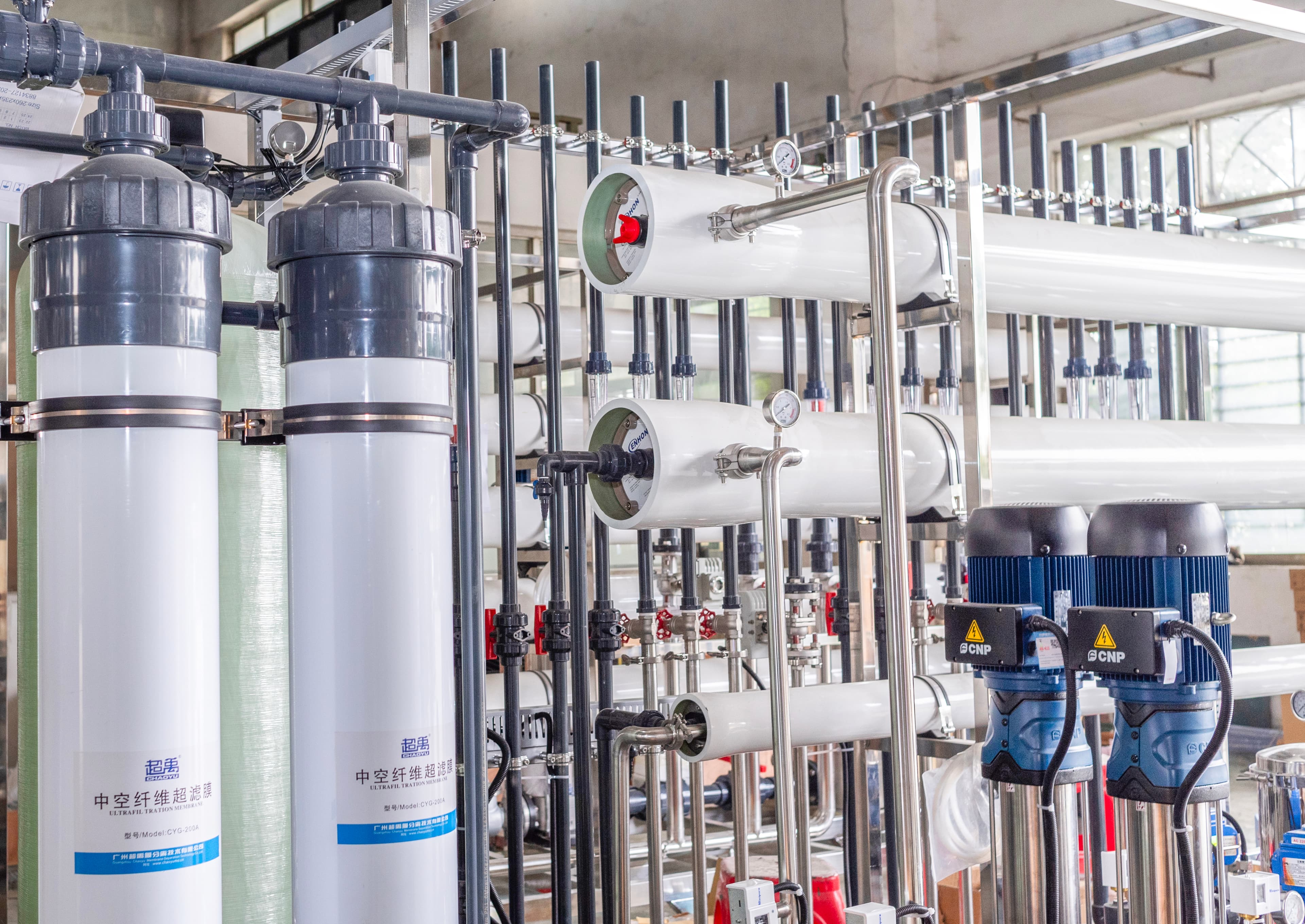
Control architecture, communication and reporting functions follow the approved project scope.
Each platform has a distinct position in the water-generation and delivery architecture.
Documentation, inspection, FAT and handover requirements are defined before the project is released into detailed engineering.
Final documentation scope is confirmed during technical clarification.
A clear input pack lets the engineering review focus on the real pharmaceutical water duty rather than a generic equipment quote.
Start with the feed-water source and analysis, required water grade, normal and peak demand, operating schedule, production use points, storage and distribution boundary, available footprint, location and project documentation needs.
It can be appropriate for selected duties, but the answer depends on the approved water-quality requirement, feed-water condition, use point and distribution scope. Pharmaceutical manufacturing should not be treated as one fixed treatment route.
EDI can be considered where the confirmed requirement calls for continuous ionic polishing after a suitable RO stage. The decision follows actual water-quality and operating conditions, not a default industry configuration.
Because water quality must be delivered at the actual use point, not only produced at the skid. Tank sizing, loop routing, recirculation, materials, monitoring and return requirements shape that result.
It should be considered through the complete approved water-use, storage, distribution and sanitization strategy. The final approach follows the customer specification and applicable project requirements.
Product-contact materials and sanitary interfaces are specified around the approved project requirement, process context and maintenance approach. The final selection is confirmed during technical clarification.
Yes, where the required sanitization approach is defined before the loop is finalized. Chemical, thermal and UV-related strategies require different project-specific engineering decisions.
Monitoring can include conductivity, flow, pressure, tank level and temperature where required, plus alarm and data functions when included in the approved scope.
The document package can be defined to include engineering, electrical, control, inspection, FAT, operation and maintenance information according to the agreed project scope.
Factory testing and records are agreed during technical clarification. The specific inspection, functional testing and documentation scope is confirmed before the project is released.
Yes, project requirements can be incorporated into the engineering review. Final compliance, validation and water-quality requirements follow the customer’s approved specification and applicable project requirements.
Share your source-water analysis, required water grade, capacity, production use points, storage and distribution requirements, sanitization approach and project location.