Industrial Pure & High-Purity Water SystemsEngineering Support from Dongguan, China
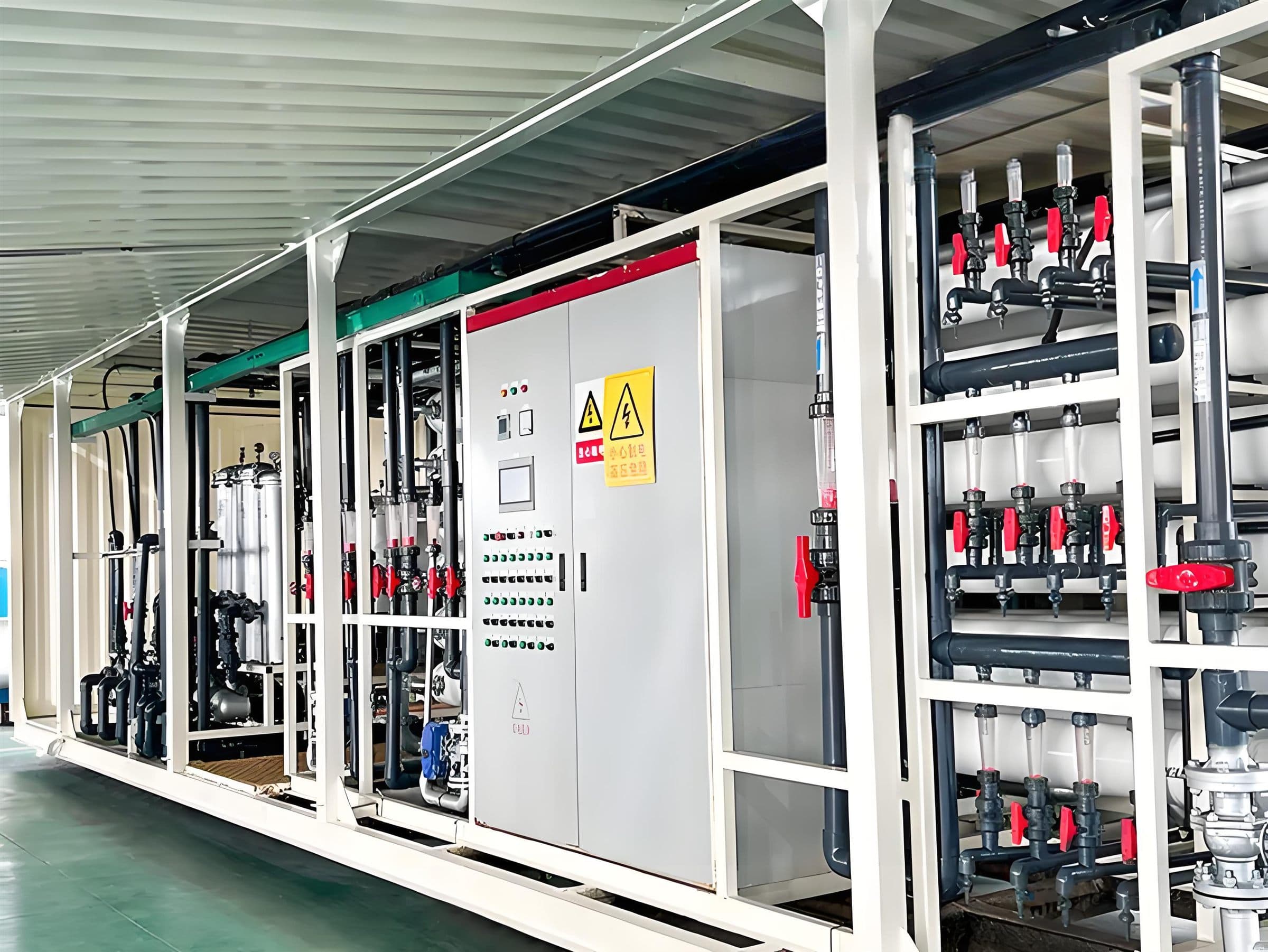
Industry solution / Chemical Processing
Process Water Systems for Chemical Manufacturing
Chemical projects begin with feed water, product-water need, chemical environment and material compatibility. Select UF, RO, pure-water or reuse stages only after that four-part review.
Quick engineering overview
Establish the design basis before selecting equipment.
Each point below is specific to this industry; final values belong in the customer’s process specification.
Where water is used
Map water use across Chemical Processing.
Each use point has its own quality, demand and delivery context. The process map comes before equipment selection.
Chemical preparation
Water quality is tied to chemical and recipe requirements.
Process water
Continuous operation and quality variability are reviewed together.
Equipment wash
Cleaning streams and compatibility need a defined boundary.
Utilities
Utilities may need a different quality route than process water.
Reuse
Reuse starts from source-stream characterization and a defined reuse point.
Typical water challenges
Resolve these inputs before selecting equipment.
Feed variability and process chemistry can change the suitable treatment route.
Scaling, corrosion and material compatibility must be addressed together.
Continuous operation requires practical cleaning, bypass and maintenance planning.
Water quality priorities
Specify the parameters that matter to this process.
Relevant parameters are shown here for engineering discussion, not as generic guaranteed specifications.
ParameterWhy it mattersEngineering basis
Process-water chemistryThe final chemistry must fit the reaction or preparation duty.Confirm process specification.
Scaling riskInfluences pretreatment, recovery and cleaning strategy.Review full feed-water analysis.
Material compatibilityTreatment and distribution materials must suit the chemical environment.Identify chemicals and concentrations.
Recommended treatment process
Build the route around the confirmed production requirement.
Chemical projects begin with feed water, product-water need, chemical environment and material compatibility. Select UF, RO, pure-water or reuse stages only after that four-part review.
Feed / stream reviewConfirm water and process inputs
ConditioningConfigured from the approved treatment route
UF / filtrationConfigured from the approved treatment route
RO when requiredConfigured from the approved treatment route
Process or reuse deliveryDeliver to the defined production use
Characterize the source and its variability.
Conditioning protects downstream equipment.
UF or RO are selected from final process quality.
Distribution materials are checked against chemical environment.
How each treatment stage works
A water system is a connected process, not a single machine.
The exact stages depend on water analysis and the agreed process duty.
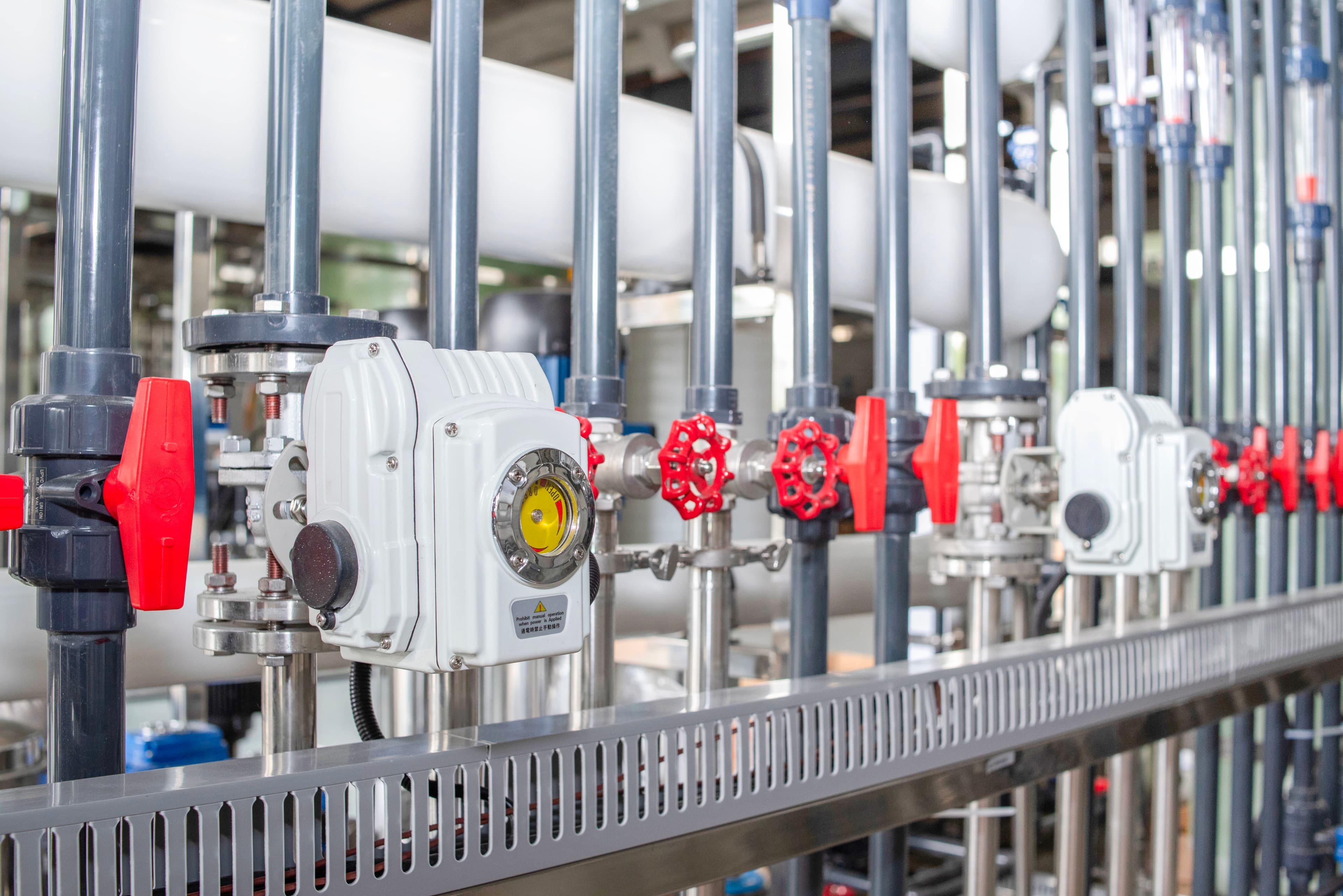
01
Pretreatment
Filtration, media treatment, softening or ultrafiltration are selected to protect downstream membranes and match the feed-water condition.
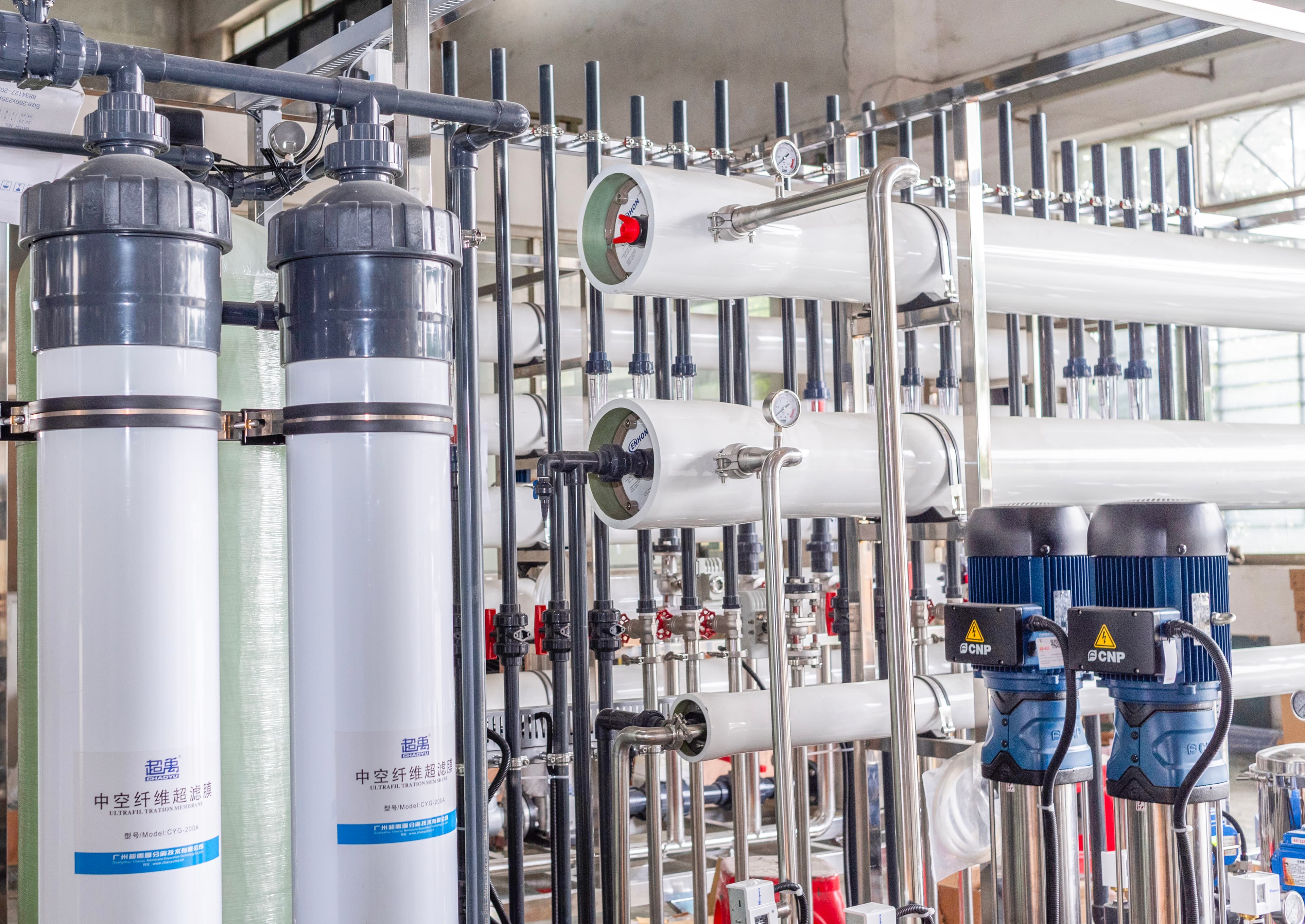
02
Reverse osmosis
RO removes dissolved salts and reduces conductivity. Single-pass or double-pass arrangements are selected from the required water quality.
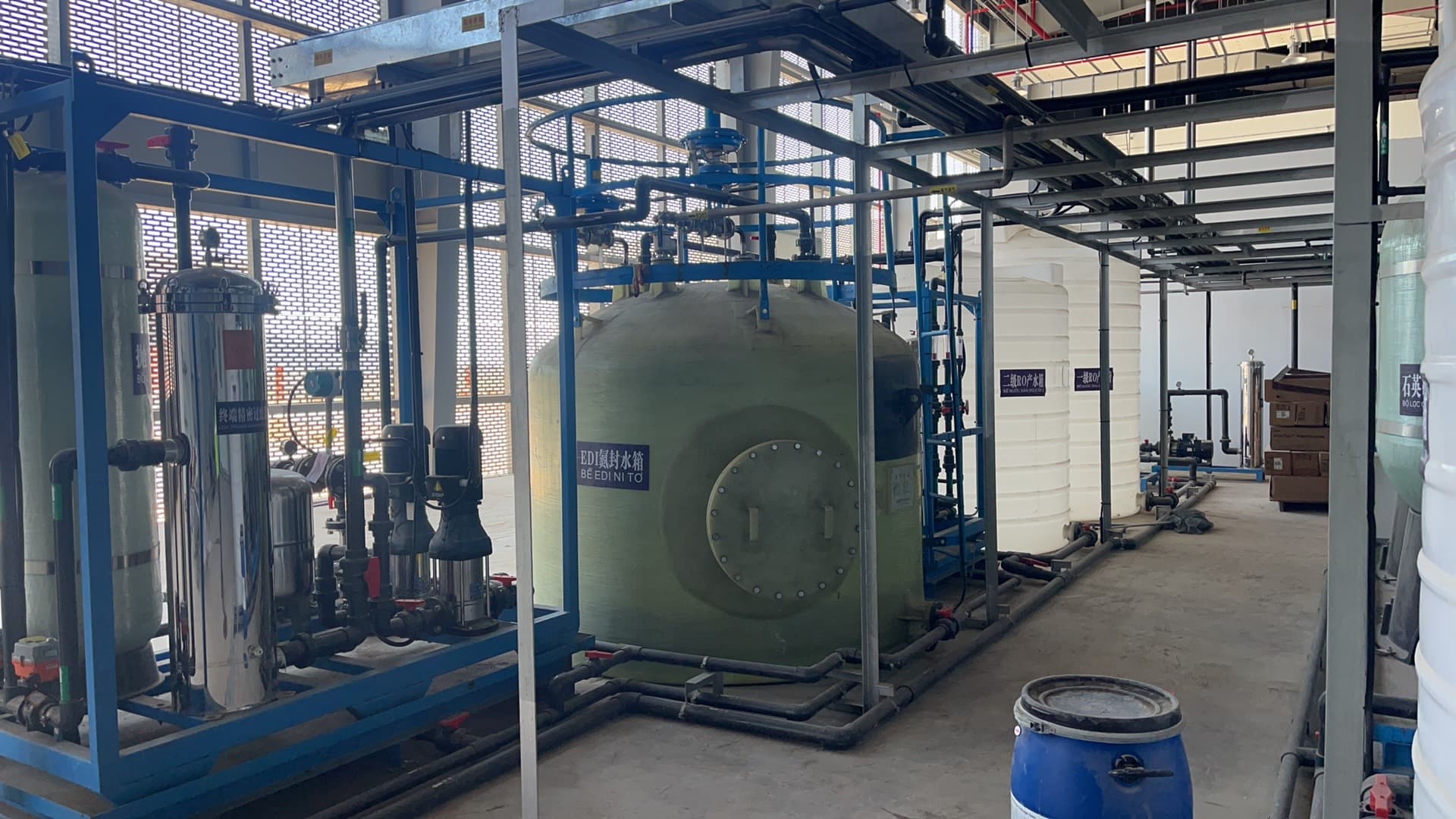
03
EDI and final polishing
EDI, UV or final filtration are added only where the confirmed process duty requires a higher-purity or controlled final-water condition.
04
Storage and distribution
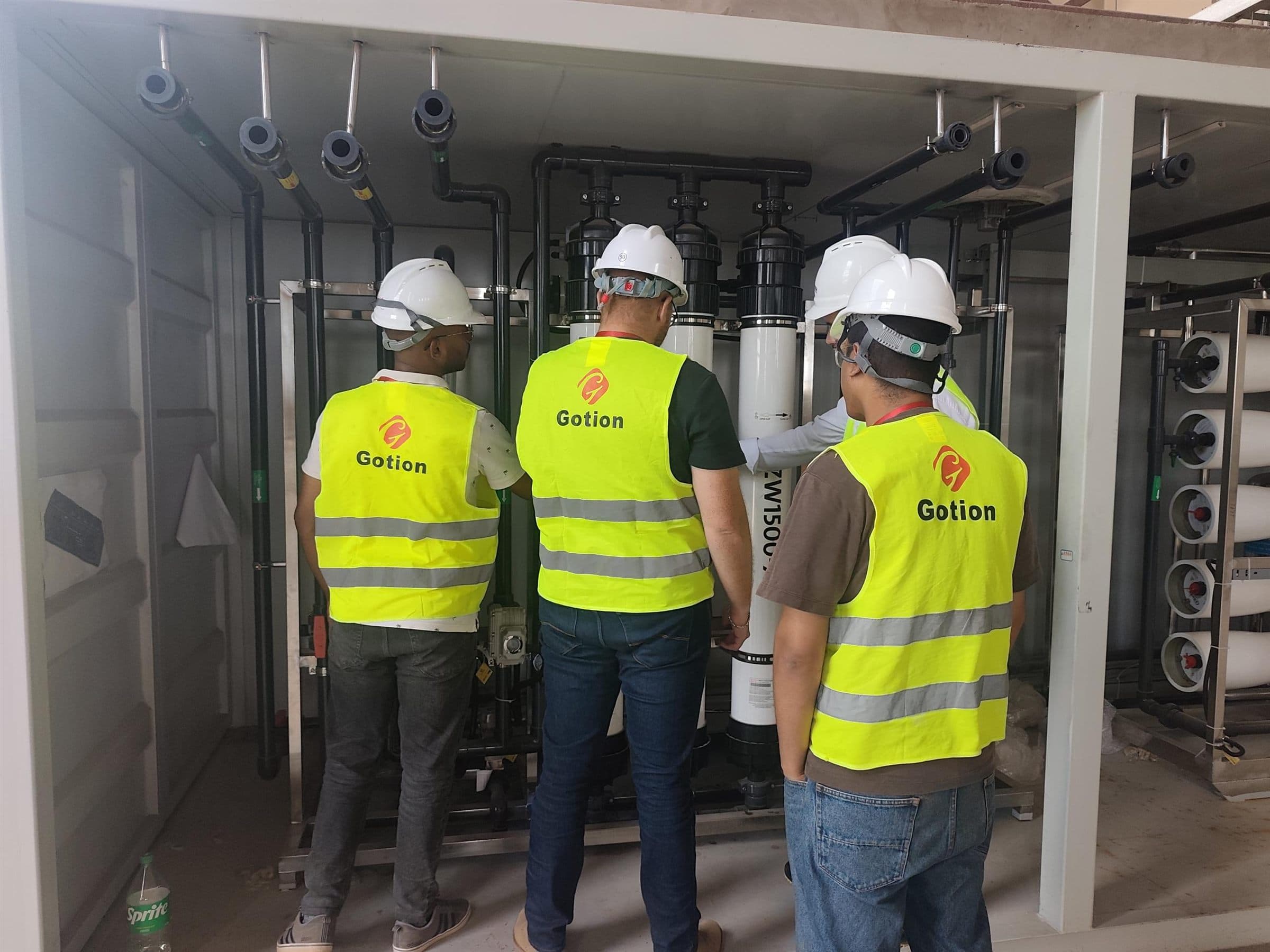
Tank sizing, recirculation, monitoring and use-point interfaces are part of the delivered water system—not an afterthought after generation.
Chemical environment & materials
Process chemistry changes water-system design.
The water route cannot be separated from the chemicals around it. Engineering must identify four inputs before selecting materials or membrane stages.
- 01Feed water
- 02Product water
- 03Chemical environment
- 04Material compatibility
Recommended systems
Equipment platforms relevant to this solution.
These established platforms provide a starting point. The final system configuration remains project-specific.
Reverse OsmosisIndustrial RO System
Industrial RO systems engineered around feed-water analysis, capacity and product-water duty.
View system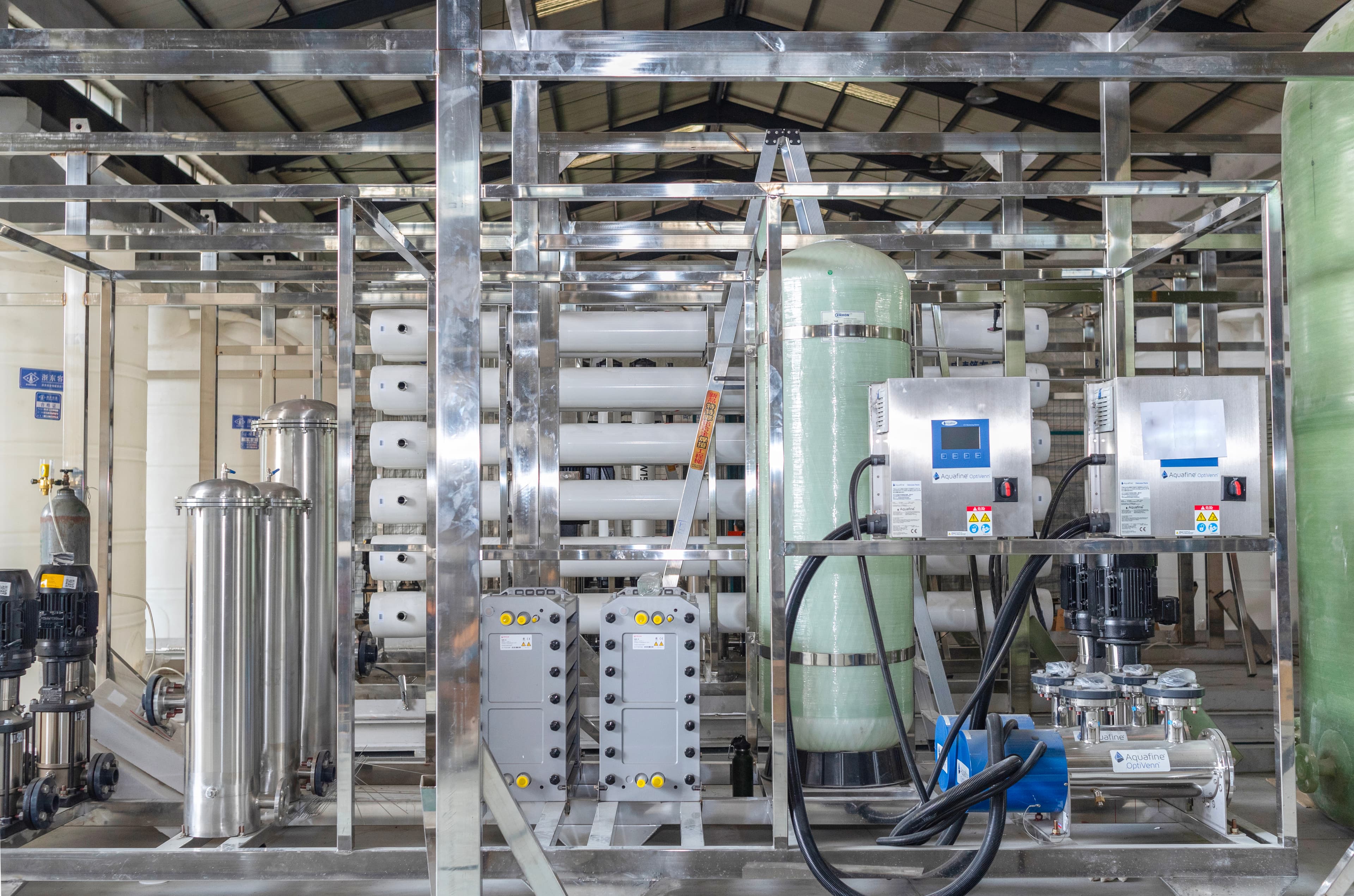 Pure Water
Pure Water System
Integrated treatment for stable industrial process water and production utilities.
View system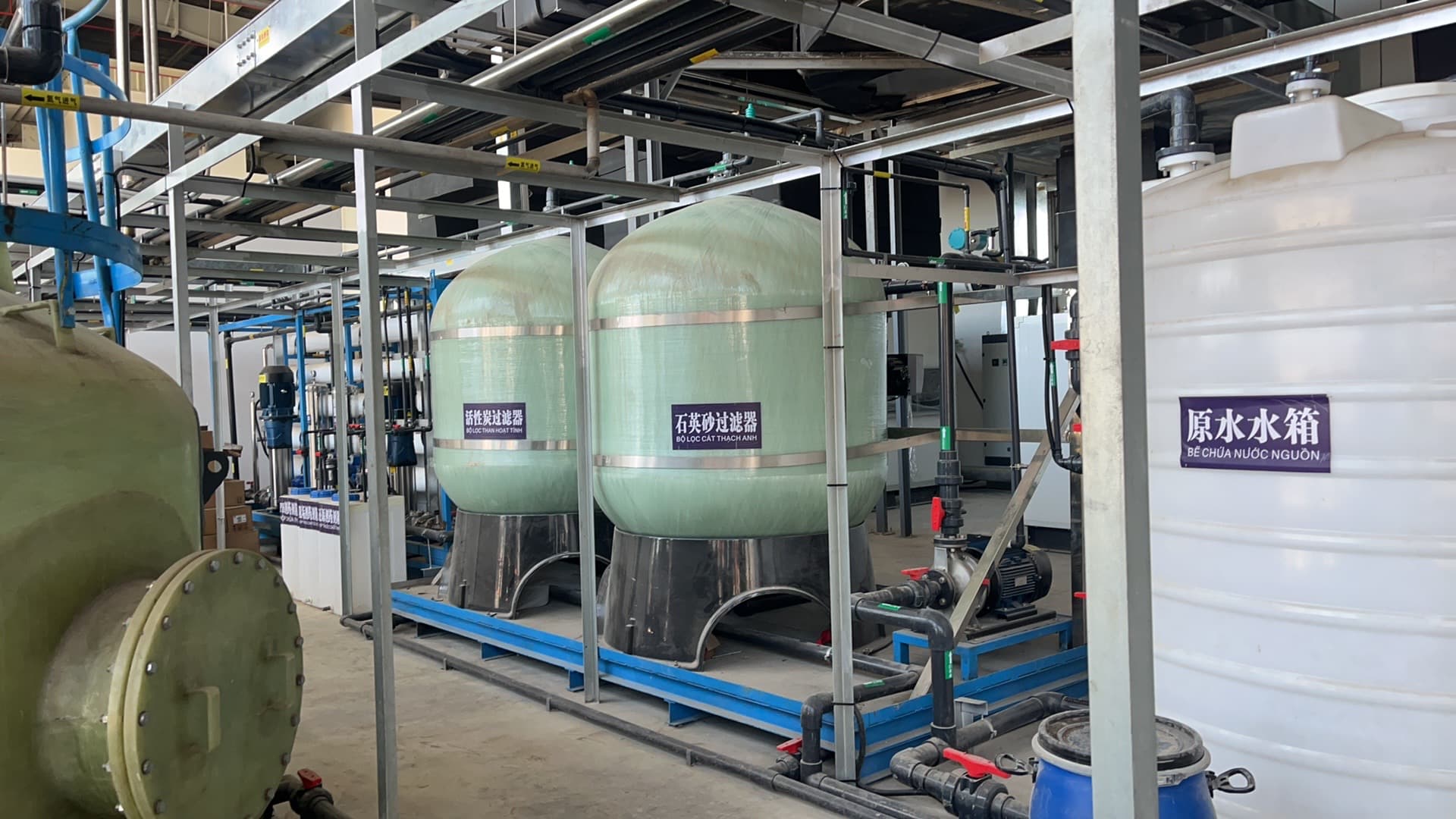 Ultrafiltration
Ultrafiltration System
UF pretreatment for suspended solids, colloid and SDI control ahead of RO or downstream treatment.
View system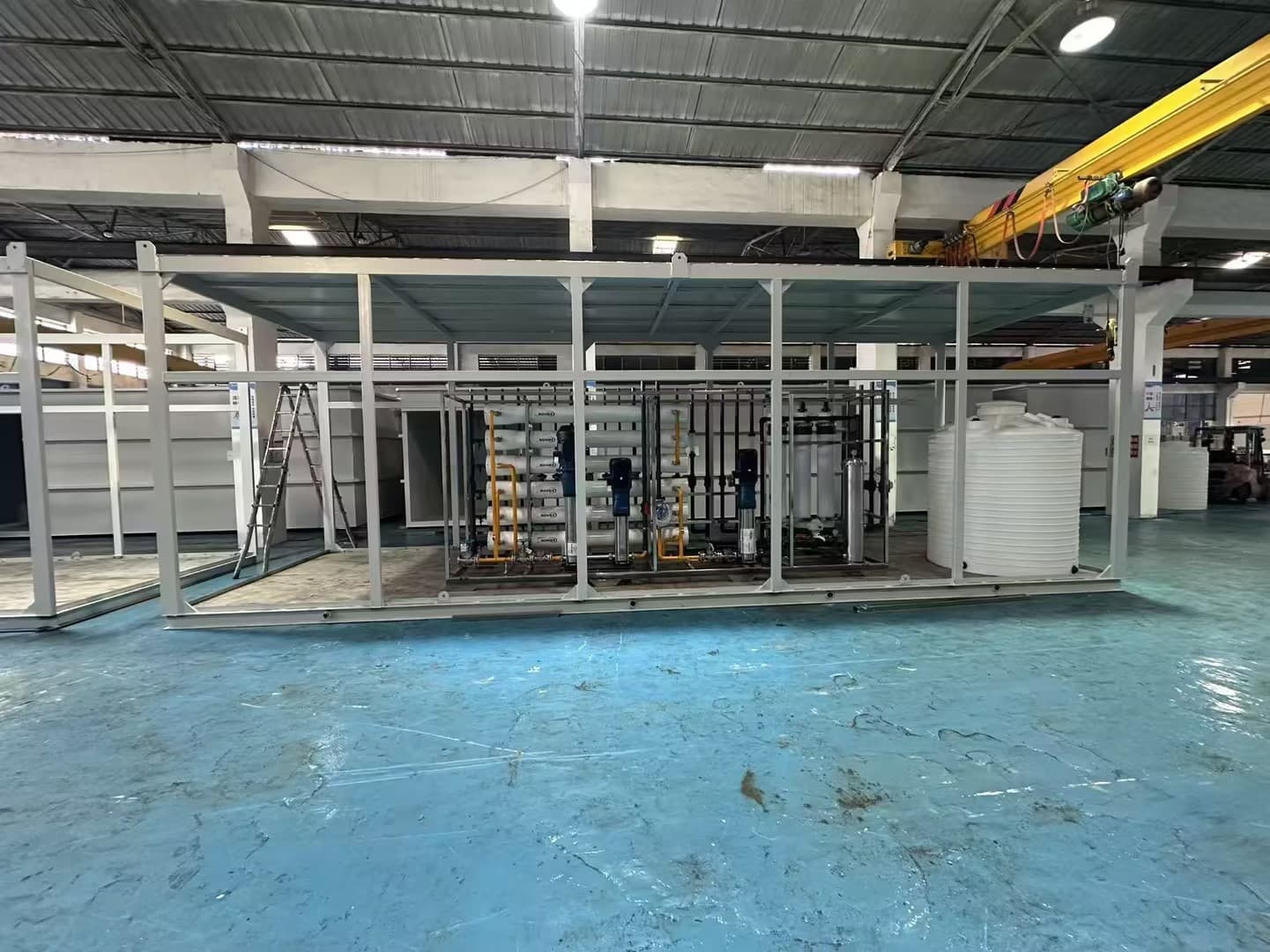 Water Reuse
Water Reuse System
Fit-for-purpose recovery systems engineered around the source stream and final industrial reuse point.
View systemEngineering outcomes
What the solution review should clarify.
A route tied to the real production use point
A clear basis for configuration, controls and distribution
Final requirements confirmed from the customer’s process specification.
Reliable operation
Operation and maintenance are part of the design.
Quality and flow monitoring points defined for the duty
Protective sequencing and maintainable service access
Operating responsibilities made visible before handover
Installation & integration
Plan the site interfaces before delivery.
Piping, electrical, drain and footprint interfaces identified
Factory-assembled skid or modular delivery assessed
Commissioning inputs planned with the site team
Buyer checklist
Confirm the variables that are unique to this industry.
Bring the core project inputs plus the items at right to an engineering discussion.
01Feed water
02Required capacity
03Target water quality
04Operating hours
05Country
06Electrical standard
07What is the chemical environment around each water use point?
08Which materials are required or prohibited?
09What feed-water variability and concentrate route are expected?
Technical FAQ
Questions before the technical proposal.
Why is material compatibility part of water-system selection?+
Because process chemistry, cleaning chemicals and water conditions can affect wetted materials and operating reliability.
Can RO treat chemical-plant feed water?+
It can, but suitability depends on full analysis, pretreatment, scaling, fouling and compatibility review.
Should process and reuse water be designed together?+
They can be linked, but each route must have a defined source stream and final use point.
How is corrosion risk addressed?+
By reviewing water chemistry, materials, process environment and the required operating conditions together.
Can a system be designed for continuous operation?+
Yes, with appropriate operating, cleaning, maintenance and redundancy decisions defined in scope.
What should be sent first?+
Send water analysis, process description, chemicals present, desired water quality, capacity and site conditions.
Related technical resources
Continue the engineering review.
Related solutions
Continue from another engineering angle.
Engineering review
Review your chemical processing water-system inputs.
Share water source, water analysis, required capacity, water quality, industry, country and project timeline. Final selection follows the complete requirement.